Every frame seen. Every finding signed.
We capture your plant with drones, crawlers and thermal cameras, and AI screens every image for corrosion, cracking, hot spots and wear. An engineer confirms each finding and signs the report, and your planner gets the actions while the defect is still the size it was.
-
Frames reviewed
100%screened, not sampled
AI screens every frame and ranks what matters; an engineer reviews the ranking.
-
Signed report
72 hfrom capture to signature
From the last frame captured to an engineer’s signature, instead of a backlog.
-
Critical findings
Same dayto your phone
Anything safety-critical reaches you before the report does.
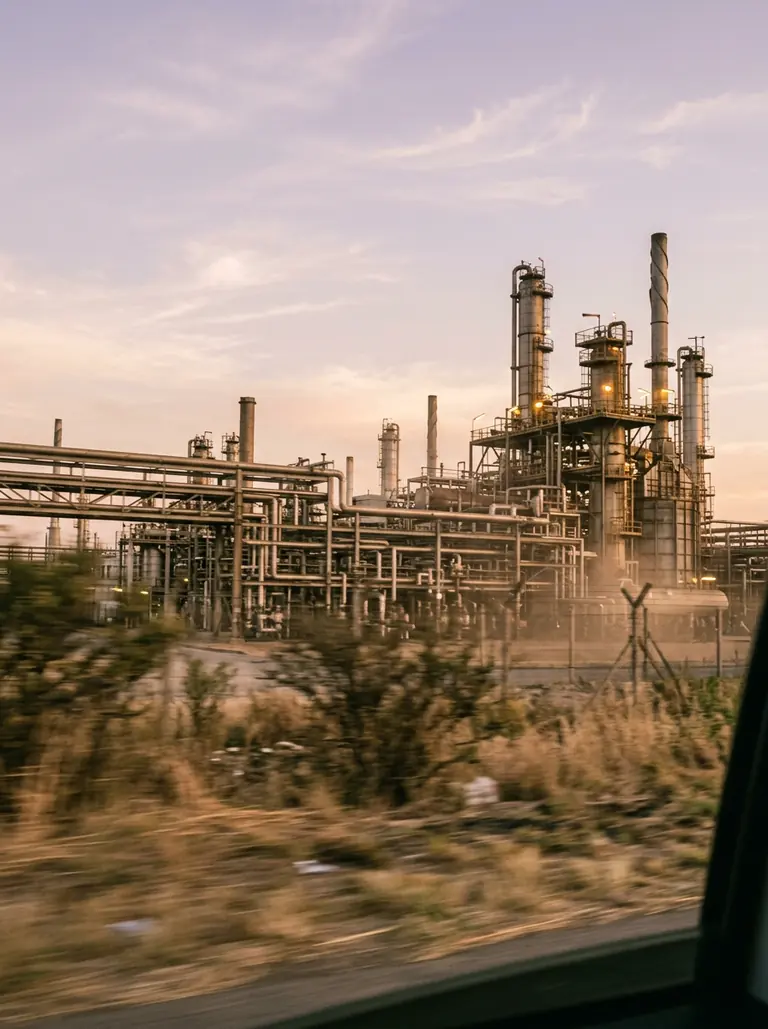
The week you know
The looking is quick. The report is not.
The drone flies in a morning. Then someone senior spends the rest of the week scrolling, sorting and formatting, while the defect waits and the shutdown window gets shorter.
-
Tuesday · 07:40
The drone flew on Tuesday.
Twenty minutes in the air over the stack and the pipe rack. By Friday you still have no report, because someone has to open four thousand frames, decide which ones matter and lay them out on a template.
What it costsA live defect waits most of a week for a decision.
-
Wednesday · 16:10
The same tired person, every time.
Your best inspector is on frame 2,300. Writing the report takes longer than the inspection did, and it was never in the schedule. Attention fades by the afternoon. An EU-funded study measured human error from 19% to 69% on visual checks, depending on the task.
What it costsSenior judgement spent on clerical review, and the defect in the frame nobody opened.
-
Thursday · 02:15
The idler was screaming for a week.
The night shift calls: the overland belt has tripped and there is a long tear where a seized roller cut it. The thermal survey would have shown it hot. It was booked for next month.
What it costsA primary conveyor down, a belt to splice, and every hour of throughput behind it.
-
Monday · 10:00
A photo album, not a trend.
This year's corrosion report has good pictures and no comparison. Is the tank floor worse than last year? Faster than the year before? Nobody can say, so the repair list follows whatever looks worst today.
What it costsMoney spent on the visible, and wall loss that goes unmeasured until it leaks.
-
Wednesday · 08:30
The AIA is booked. The history is in three PDFs.
The vessel is due for its statutory inspection under the Pressure Equipment Regulations, and the previous findings, thickness readings and repair records live in three formats in two inboxes.
What it costsDays of preparation, and the risk of an overdue inspection on a pressure vessel.
-
Friday · 15:45
The finding never became a work order.
It is on page 31 of the report. The report is attached to an email. The planner never saw it, and SAP Business One has no record. Next year's inspection finds the same defect, a little bigger.
What it costsKnown defects left open, repeat findings and rework.
What we take off your plate
From the first frame to the work order.
We plan the inspection, capture the data, screen every image and sign the report. You receive findings your planner can schedule and evidence your AIA, LMI or insurer can follow.
-
Inspection plan per asset
What we look at, with which sensor, against which acceptance criteria and standard. Agreed with you before anyone mobilises.
-
Captured data set
Visual, radiometric thermal and, where specified, ultrasonic thickness readings, each tagged to the asset, the location on it and the date.
-
AI-screened defect register
Every frame screened. Corrosion, cracking, coating loss, hot spots, misalignment, missing fasteners and overheated idlers, located, ranked by severity and de-duplicated.
-
Engineer-signed inspection report
Annotated images, severity, recommended action and a due date for each finding, in Word and PDF, reviewed and signed by the responsible engineer.
-
Comparison with last time
New, worse, unchanged or repaired, set against the previous inspection. Your first inspection with us becomes the baseline.
-
Draft work orders
An action list ready for your planner, as an Excel file laid out to load into SAP Business One or your planning sheet.
-
Statutory evidence pack PER reg 11 · DMR reg 18
Where our inspection supports a statutory one, the history, readings and findings your AIA or LMI needs, in one indexed pack.
-
A record you can question
Ask "every hot spot on MCC 3 since 2025" and get an answer that cites the frames and reports it came from.
How it gets done
Three days, from capture to a signed report.
Robots and drones do the climbing. AI does the hours of looking. Our engineers spend their time where it counts, on judgement, and nothing reaches your planner until you approve it.
-
Day 0Scope
We agree what matters, and you approve the plan.
Asset list, criticality, acceptance criteria, the standards that apply, permits and site rules. Before that meeting, AI has read your previous reports, drawings and NCRs and built a checklist and route per asset; our engineer has checked it.
- Inspection engineer
- AI reads the history
- You approve
-
Day 1 · 07:00Capture
Robots and drones go up, and in.
Drone, crawler or handheld capture under your permit to work, visual and thermal in one pass where the job allows. No scaffold to look, no rope to reach.
- Drones and crawlers
- Technician
-
Day 1 · 18:00Screen
AI screens every frame overnight.
Defects detected, located on the asset, ranked by severity, and duplicates merged. It is set to over-flag rather than miss, so the morning starts with a ranked list, not a hard drive.
- AI screens
-
Day 2 · 08:00Review
An inspector rules on every finding.
Confirm, reject or reclassify. Our inspector adds what the image can't say: the history, the service, the consequence. Anything safety-critical is phoned through to you the moment it is confirmed, not held for the report.
- Inspector
-
Day 3 · 12:00Sign
AI drafts the report. An engineer signs it.
The report, defect register and comparison with last time are generated in Word and PDF. The responsible engineer reads it end to end, sets the recommended actions and due dates, and signs.
- AI drafts
- Engineer signs
-
Day 3 · 16:00Act
You decide what gets raised.
Draft work orders arrive the same afternoon, one line per finding, with the evidence attached. You approve which become work, and when.
- You approve
-
Next timeClose the loop
Repairs checked, baseline moved on.
Repaired items are re-inspected, and the next inspection flies the same route so the comparison is like for like. Each visit makes the next one sharper.
- Same route
- AI compares
What the three days depend on. The clock starts when capture is complete and the scope is agreed. Large plants are captured in sections, and each section runs on its own clock. Statutory inspections of pressure equipment and lifting machinery stay with your appointed AIA or LMI; we hand them better evidence, sooner.
The old way, and with Kuumba
Same assets. A shorter road to a decision.
| Area | The old way | With Kuumba |
|---|---|---|
| Images reviewed | A sample, by whoever has the afternoon | Every frame screened by AI, every finding ruled on by a person |
| Time to a signed report | When the review backlog allows | Within 72 hours of capture |
| Critical findings | On a page of the report | A phone call the day they are confirmed |
| Change since last time | Two photo albums, side by side | New, worse, unchanged or repaired, for every finding |
| From finding to work order | Retyped by the planner, if it is seen at all | Draft work orders the day the report is signed |
| Statutory inspection prep | History gathered from three PDFs and two inboxes | One indexed pack for your AIA or LMI |
| Who signs | The person who wrote it | The responsible engineer, after review of every finding |
Where AI helps, where people decide
A second set of eyes that never gets tired.
AI does
The hours of looking, sorting and formatting.
- Screens every visual and thermal frame, at four in the afternoon as carefully as at eight in the morning.
- Locates each candidate defect on the asset and ranks it by severity.
- Reads previous reports and photo sets, and compares this year with last.
- Drafts the report, the defect register and the work orders.
- Escalates anything it hasn't seen before, instead of guessing.
People decide
What is a defect, how bad, and what gets done.
- Whether each flagged item is real, and how serious it is in this service.
- The recommended action and how soon it must happen.
- When a finding is critical enough to pick up the phone.
- Signing the report. Statutory sign-off stays with your AIA or LMI.
- Which actions you raise, and when.
AI never signs a report or closes a finding. Drones and crawlers go to the stacks, ducts and vessels so people don't have to: see Robotics & Drones.
Standards we work to
Inspected to the rules your plant answers to.
Every finding names the acceptance criterion it was judged against, so your engineers, your AIA and your insurer can follow the reasoning without asking us.
- OHS Act 85 of 1993And the regulations made under it
- Pressure Equipment Regulations 2009Reg 11: AIA inspection, at most every 36 months
- Driven Machinery Regulations 2015Reg 18: lifting machines and the LMI
- Major Hazard Installation RegulationsReg 10 risk assessment, to SANS 1461
- Electrical Installation Regulations 2009SANS 10142-1 wiring code
- MHSA 29 of 1996Conveyor belt Code of Practice guideline, GN R1024
- SANS 347Pressure equipment categorisation
- ISO 9712NDT personnel, SAIW certification scheme
- ISO 18436-7 · ISO 18434-1Thermographer competence and thermal condition monitoring
- ECSAEngineering Profession Act 46 of 2000
- POPIA 4 of 2013Imagery that captures people
- API 510 · 570 · 653Vessels, piping and tanks, where your plant works to them
Questions engineers ask
The questions we hear first.
Does the AI sign the report?
No. AI screens the images and drafts. An inspector rules on every finding, and the responsible engineer reads the whole report and signs it.
People decide what is a defect and what gets done. That line does not move.
What about false positives?
We tune the screening to over-flag rather than miss, because a false alarm costs an inspector a few seconds and a missed crack can cost a shutdown. Our inspectors clear the false positives before you see anything.
You receive a reviewed list of findings, not a feed of raw alerts.
Can this replace our statutory AIA or LMI inspection?
No. Inspections under the Pressure Equipment Regulations are signed by the Approved Inspection Authority, and lifting machinery tests under the Driven Machinery Regulations by a registered Lifting Machinery Inspector.
We prepare for those inspections and support them: the history, the thickness readings, the findings since last time, in one pack. Better evidence, sooner, and fewer surprises on the day.
Will it work with our old reports?
Yes. We read your previous reports, PDFs, data books and photo sets before the first visit, so the first inspection already shows what has changed since the last one, even if the last one was done by someone else.
What if the AI has never seen our type of defect?
Then the inspector catches it, which is what the review step is for. Anything the model is unsure of is escalated to a person, never quietly dropped.
Once our inspectors have labelled your examples, the screening learns them, so the next inspection flags that defect too.
Who owns the images and the data?
You do. Everything is held in your own isolated Kuumba Work environment, with client data stored in South Africa. Imagery that captures people is handled under POPIA, and people are never the subject of the inspection.
Related services
What sees the defect, and what fixes it.
-
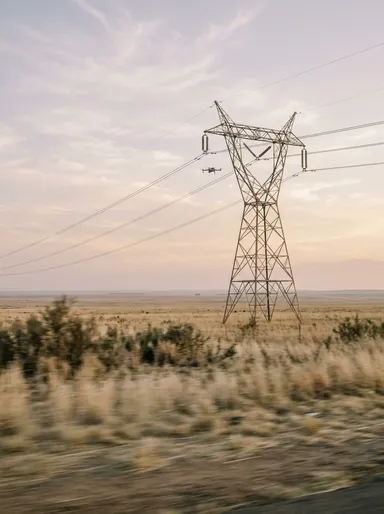
Robotics & Drones
Flown by licensed remote pilots, so your people stay out of harm's way.
Read more -
Digital Twins
A living model of your assets that grows sharper with every visit.
Read more -
Managed Operations
Your assets kept performing, quietly, under one ongoing agreement.
Read more
Kuumba Work
The workspace behind every report we sign.
Our inspectors and engineers work in Kuumba Work, the AI workspace behind all our services. It is where findings, history and reports stay connected from one inspection to the next.
- Ask the history. Questions about an asset get answers that cite the report, reading or frame they came from.
- Reports out. Inspection reports in Word and PDF, defect registers and work-order lists in Excel.
- Reads SAP Business One. Read-only, so findings land against the right equipment and open orders.
- Follow-ups that run themselves.Building Reminders on open findings and due dates, sent only after a person approves.