Your safety file, seven times faster. True to the site.
We compile your Construction Regulations 2014 safety file from the scope, drawings and contractor documents you already hold. AI drafts and cross-checks every page, our SHE practitioners shape it to the work in front of you, and a registered professional signs it before your client sees it.
-
Safety file
7×faster
One working day instead of seven. Compiled, checked and signed from the documents you already hold.
-
Your time on the file
5×less
About half a day of your review, instead of a week of evenings, emails and follow-ups.
-
Expiring certificates
30days’ warning
Medicals, appointments and competency certificates flagged before they lapse, not after the auditor finds them.

The week you know
The file takes the hours the site should get.
A resubmission on Monday, a chase list by Wednesday, a stats pack the night before the client meeting. None of it makes anyone on site safer. All of it has to be right.
-
Monday · 07:10
The file came back.
The client's agent returned it with comments on three subcontractor sections: an unsigned 37(2) agreement, an appointment letter with last year's date, a method statement that doesn't match the programme. You'll fix it tonight and resubmit.
What it costsSite establishment waits while the file goes round again.
-
Tuesday · 09:30
Chasing paper, not hazards.
The scaffolder's medicals are "on the way". The electrician's letter of good standing lapsed in March. You know exactly who owes what, but the list lives in your head and your WhatsApp.
What it costsYour mornings, spent on the phone instead of on site.
-
Wednesday · 11:00
Expired, and nobody saw it.
A worker's medical certificate of fitness lapsed last week. The auditor found it before you did. Now he's stood down, the finding is on the report, and the real question is how many more there are.
What it costsA non-conformance, a gap in the crew, and a 30-day audit that starts on the back foot.
-
Wednesday · 15:20
A risk assessment written for another job.
The baseline was written for the tender. The method statements came from the last project. When the scope changed in week six, the risk assessment didn't.
What it costsExposure nobody can see until an inspector, or an incident, points to it.
-
Thursday · 14:05
Seven days to report it properly.
A rigger is hurt at the crane pad and likely off for more than two weeks. Now there is a reportable incident, witness statements, a root-cause investigation and corrective actions to close, on a site that didn't stop.
What it costsThin investigations come back as repeat incidents, and as the inspector's next visit.
-
Friday · 21:40
Month-end, again.
Hours worked, LTIFR, toolbox attendance, inspections, open actions. The monthly HSE pack is rebuilt from registers, spreadsheets and photos, usually the night before the client meeting.
What it costsA day of every month spent counting instead of looking.
What we take off your plate
A complete file, and the work that keeps it complete.
We build to the Construction Regulations 2014 and your client's health and safety specification, then keep the file live for the life of the project. You receive documents your people can sign and an auditor can follow.
-
Site-specific health and safety plan Reg 7(1)(a)
Built on the client's baseline risk assessment and specification, and mapped to your scope and programme.
-
Risk assessments and method statements Reg 9 · Reg 10
One per activity, with hazards, controls and responsible persons written for this site, plus a fall protection plan wherever work at height is on the programme.
-
Legal appointment letters Reg 8
Construction manager, supervisors, safety officer and the competent persons for scaffolding, excavations and lifting, drafted for your appointees to sign.
-
Subcontractor file review Reg 7(1)(c)
Section 37(2) agreements, written appointments, medicals, inductions and letters of good standing, checked page by page, with every gap listed by owner.
-
Certificate and expiry register
Every medical certificate of fitness, competency certificate and appointment, with the person it belongs to and the date it lapses.
-
Induction and toolbox talk programme
Site induction content, and a toolbox schedule tied to the activities coming up in your look-ahead rather than a generic calendar.
-
Inspection registers and checklists
Scaffolds, ladders, excavations, electrical installations, portable tools and lifting equipment, laid out so every finding carries through to close-out.
-
Incident investigation packs GAR 8 · 9
The Annexure 1 record, statements, root cause and corrective actions, prepared inside the seven-day reporting window.
-
Monthly HSE statistics pack
Hours worked, frequency rates, training, inspections and open actions, compiled from the registers and checked by a person before it reaches the meeting.
-
A file that is ready for every audit Reg 5(1)(o)
Indexed and current for your client's 30-day audits, with last month's findings shown closed and the evidence one click away.
How it gets done
One working day, from your documents to a signed file.
AI takes the first pass, so our practitioners spend the day on judgement. Nothing leaves until a registered professional has signed it and you have approved it.
-
07:30Inputs in
You send what you already have.
Scope of work, drawings, the programme, the client's baseline risk assessment and health and safety specification, and whatever subcontractor documents have arrived. Email, a shared folder or a site visit. No new forms to fill in.
- You
-
08:00First pass
AI drafts, and checks every page.
Kuumba Work reads the specification and drawings, breaks the scope into activities, and drafts the plan, risk assessments, method statements and appointment letters. Every contractor document is checked for presence, signature and validity against the Construction Regulations 2014.
- AI drafts
- SHE practitioner
-
10:30Gaps out
Missing documents go out by name.
Anything absent, unsigned or close to expiry is listed per contractor, with what is needed and which regulation asks for it. We do the chasing. You are copied, not tasked.
- SHE practitioner
- AI tracks
-
11:00True to site
Our practitioner makes it specific.
A SHE practitioner works through each activity against the programme and site conditions, rewrites anything generic, and adds what only time on site would catch: the crane pad on fill, the overhead line beside the laydown area.
- SHE practitioner
-
15:00Sign-off
A registered professional signs.
A competent person reviews the complete file, and the plan is signed by a registered professional where the work requires it: registered with the SACPCMP wherever the project calls for a construction health and safety agent, manager or officer. AI drafts; people are accountable.
- Registered professional
-
16:30Issued
You approve, and the file goes out.
You read a one-page summary of what is in, what is open and who owes it, then approve. The indexed file goes to your client or their agent, digital and ready to print for site.
- You approve
-
Day 2and onward
The file stays live.
New contractors, scope changes, expiring certificates, incidents and the 30-day audit are handled as they happen, so the file you hand over at the end matches the job that was built.
- SHE practitioner
- AI keeps the registers
What the day depends on. The clock starts once your scope and the client's specification are in hand. Documents only a subcontractor can supply arrive when they arrive, so the file is issued with those named as open items, never papered over. Client approval of the plan, and any construction work permit, follow their own timelines.
The old way, and with Kuumba
Same regulations. A different week.
| Area | The old way | With Kuumba |
|---|---|---|
| Time to a submittable file | About a week of evenings, emails and follow-ups | 7× faster: one working day from complete inputs |
| Contractor documents | Checked by eye, one folder at a time | Every page checked for presence, signature and date, with gaps listed by owner |
| Expiry dates | Found when the auditor finds them | Held in one register and flagged before they lapse |
| Risk assessments | Carried over from the last job | Written from this scope and programme, and revised when either changes |
| 30-day audits | A scramble before every visit | A file that is already current, with the evidence indexed |
| Incidents | Written up late, with actions left open | Annexure 1 record, root cause and actions tracked to close-out |
| Who signs | Whoever has a moment | A competent person, SACPCMP-registered where the project requires it |
Where AI helps, where people decide
AI does the grind. People carry the responsibility.
AI does
The reading, drafting and checking nobody has time for.
- Reads specifications, drawings, programmes and contractor submissions in minutes.
- Drafts the plan, risk assessments, method statements and appointment letters as a first pass.
- Checks every document for presence, signature, dates and the right regulation reference.
- Keeps the registers current and compiles the monthly statistics.
- Shows its sources, so every line traces back to the document it came from.
People decide
The judgement, the signatures and the stop-work calls.
- What is actually hazardous on this site, this week.
- Whether a control is realistic for the crew who has to use it.
- Who is competent, and who is appointed.
- Root cause and accountability after an incident.
- Signing the plan, and approving what goes to your client.
AI never signs, appoints or stops a job. Where a site needs eyes at height, licensed remote pilots capture the evidence: see Robotics & Drones.
Standards we work to
Written to the law you are audited against.
Every document in the file names the clause that asks for it, so your client's agent can check it in seconds and an inspector can follow it without a guide.
- OHS Act 85 of 1993Sections 8, 24 and 37(2)
- Construction Regulations 2014Regulations 5, 7, 8, 9 and 10
- General Administrative RegulationsIncident reporting and records
- COID Act 130 of 1993Letters of good standing
- MHSA 29 of 1996Contractor work on mines
- SACPCMP registrationCHS agents, managers and officers
- ISO 45001Occupational health and safety
- ISO 14001Environmental management
- NEMA 107 of 1998Section 28 duty of care
- Draft Construction Regulations 2025Published for comment; we track every change
Questions engineers ask
The questions we hear first.
Does one day mean we can start on site tomorrow?
Not on its own. One day is how long we take to compile, check and sign the file from complete inputs. Your client, or their agent, still has to approve the health and safety plan before work starts, and projects that need a construction work permit must apply at least 30 days ahead.
What changes is that the file stops being the reason you wait.
Who signs the file, and who is accountable?
People do. A competent person reviews the file, and the plan is signed by a registered professional where the work requires it: registered with the SACPCMP wherever the project calls for a construction health and safety agent, manager or officer.
Legal appointments are drafted by us and signed by your appointees. Accountability under the OHS Act stays where the law puts it; our job is to make sure the paper behind it is right.
What do you need from us to start?
The scope of work, drawings, the programme, the client's baseline risk assessment and health and safety specification, and any contractor documents you already hold.
If the specification hasn't been issued yet, we say so on the first morning, because a plan can't be approved against a specification that doesn't exist.
What about subcontractors who don't send their documents?
We chase them directly, with a list that tells each contractor exactly what is missing and which regulation asks for it. Anything still outstanding is marked as an open item on the file and in your summary.
We never fill a gap with a placeholder.
Can the AI get a regulation wrong?
It can, which is why it never has the last word. Every draft cites the document or clause it came from, and our practitioner checks each reference before anything is signed.
Your documents stay in your own Kuumba Work environment, with client data stored in South Africa.
Does this work on mines, under the MHSA?
Yes, with a different rulebook. On a mine, contractor work answers to the Mine Health and Safety Act and to the mine's own codes of practice and contractor standards. We build the file to those requirements.
The method doesn't change: AI drafts and checks, people review, sign and decide.
Related services
Safety rarely travels alone.
-
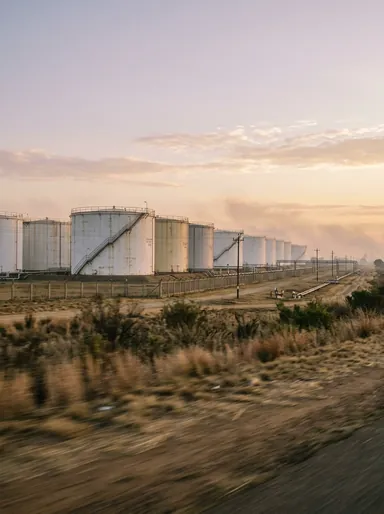
ISO & Compliance
Audit-ready all year, with evidence gathered as the work happens.
Read more -
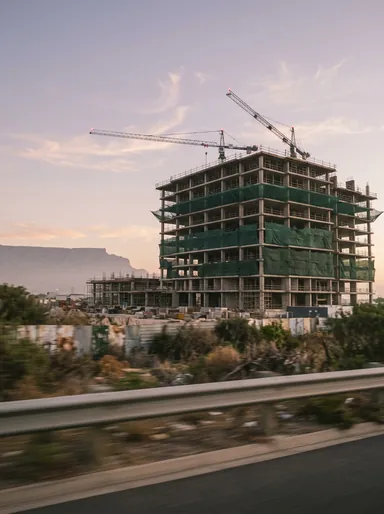
Construction
Built and commissioned with partners, documented by us from day one.
Read more -
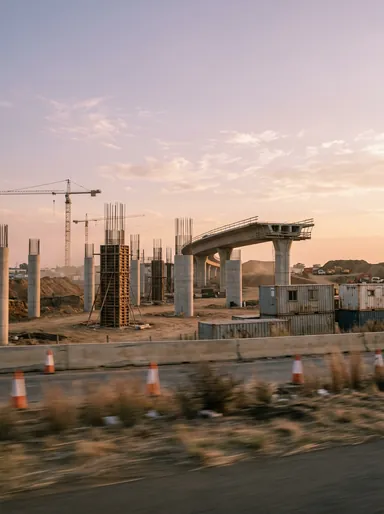
Project Management
Plans, controls and progress that everyone on site can follow.
Read more
Kuumba Work
The workspace behind every file we build.
Our SHE team works in Kuumba Work, the AI workspace behind all our services. It is how one practitioner keeps many files current without losing the thread.
- Ask the file. Questions get answers that cite the certificate, letter or register they came from.
- Registers as apps. Certificates, appointments, inspections and incidents in tables your team can filter and update.
- Documents out. The plan, the stats pack and audit responses generated as Word, Excel or PDF.
- Reminders that chase themselves.Building Expiry warnings and subcontractor follow-ups, sent only after a person approves.