The right revision, in every hand.
Our engineers and draughtspeople design and draw for AutoCAD, Revit and Plant 3D, to your title block and your numbering. AI checks every revision, reference and RFI before it leaves us, and a registered professional signs wherever the work requires one.
-
RFI response
3×faster
About ten days down to three: drafted and sourced inside two working days, then decided and signed by your engineer.
-
Review comments
1register, same day
Mark-ups, spreadsheets and emails from six formats, with one owner on every line.
-
Drawing register
Dailynot now and then
Rebuilt every evening from what was actually issued.
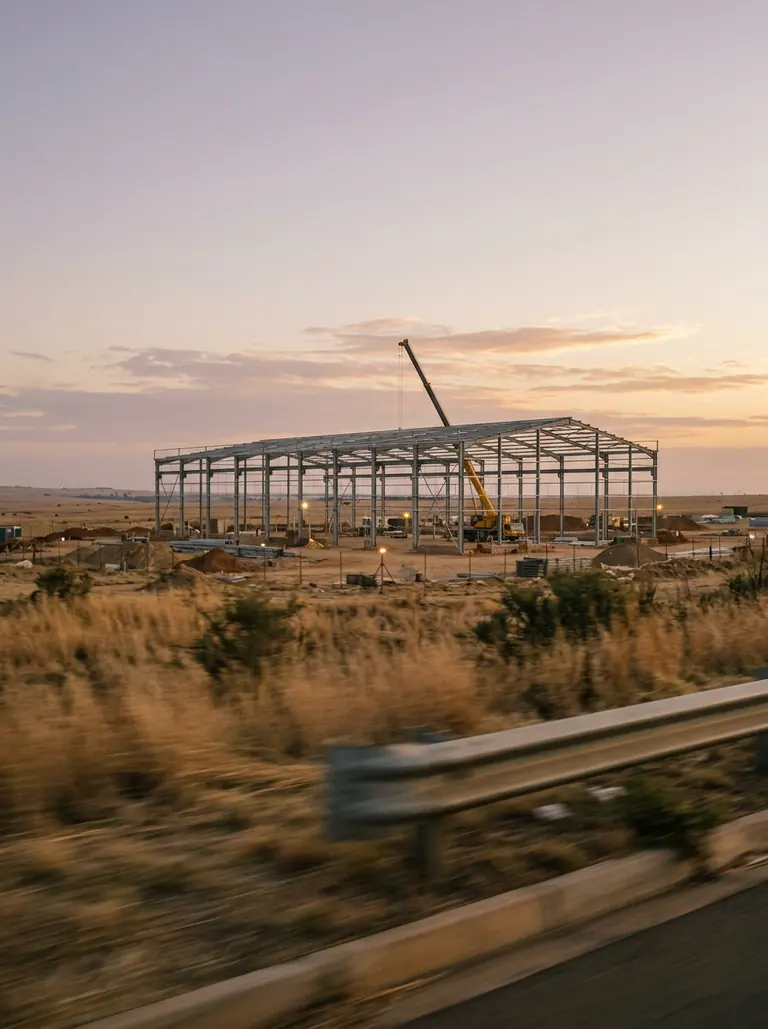
The week you know
Most rework starts on paper.
South African studies put rework at around 5% of contract value. Not all of it is drawing control. But a superseded sheet, a missed comment or a note that contradicts the spec is where a great deal of it begins, long before anyone lifts a spanner.
-
Monday · 07:40
Which revision is the fitter holding?
Rev C is on the register. Rev A is taped to the container wall. The base plates go down 400 mm off grid, and nobody knows until the steel arrives for bolting.
What it costsA crane re-hired, a crew stood down, and a transmittal nobody can prove was received.
-
Tuesday · 10:15
The RFI that sat for two weeks.
Site asked about a nozzle orientation. The question is waiting in an inbox behind a design review, and the crew either works round it or waits. Industry studies put the median reply at almost ten days.
What it costsA crew working on assumptions, and a variation order waiting to be written.
-
Tuesday · 16:00
Five disciplines. Nobody owns the gaps.
Civil, structural, mechanical, piping and E&I each issued on time. The cable ladder and the pipe rack both claim the same 300 mm, and checking the interface was nobody's job.
What it costsA clash found in the field, which becomes an RFI, then a variation.
-
Wednesday · 09:00
Comments in six formats.
The client's review comes back as a marked-up PDF, an Excel register, three emails and a phone call. Someone spends a day consolidating before anyone engineers anything.
What it costsA day lost every review cycle, and the one missed comment that returns as a site problem.
-
Thursday · 13:30
The spec says 316. The drawing says 304.
The specification calls for 316 stainless. A note on the GA drawing, carried over from an earlier revision, still says 304. Procurement buys from the drawing.
What it costsAn NCR, a replacement order on long lead, and a programme that has to absorb both.
-
Friday · 16:45
The as-builts are “nearly done”.
Practical completion was in March. The red-line mark-ups are in a box in the site office. The plant runs on drawings that don't match what was built, and the next brownfield job starts with a re-survey.
What it costsIsolation points in the wrong place, permits raised against the wrong line, and a survey you've already paid for once.
What we take off your plate
Drawings you can build from, and the paper that proves it.
We deliver DWG/DXF, IFC and PDF for AutoCAD, Revit or Plant 3D, to your CAD standard, title block and numbering, with native files on request. Around the drawings we keep the registers, logs and reports that make a package easy to approve and hard to misread.
-
Issued-for-construction packages
Designed by our engineers, modelled and drawn by our draughtspeople, and issued to your title block, layers and numbering.
-
Drawing and document register
Current revision, status from IFR through IFC to as-built, transmittal history and a superseded list, brought up to date at the end of every day.
-
A change summary with every reissue
What changed between Rev B and Rev C, in plain words, checked by a person before the drawing leaves us.
-
Interdisciplinary check report
Interfaces and clashes between disciplines, ranked by risk, each with a proposed resolution for the discipline leads to decide.
-
Specification and drawing cross-check
Material grades, ratings and codes in every drawing note checked against the specification and datasheets, with each contradiction listed by page.
-
Consolidated design review register
Every client comment from every source in one place, with one owner, one status and the evidence that closes it.
-
RFI log with drafted responses
Each response drafted with the governing drawing, the specification clause and earlier answers cited, ready for the engineer of record to decide.
-
Designer's pre-tender report CR 2014 · Reg 6
Health and safety information that affects pricing, design loads and geotechnical conditions, drafted for the registered designer to finalise and issue to the client.
-
As-built pack CR 2014 · Reg 7(1)(e)
Red-lines incorporated, an as-built register, and a check that nothing in the consolidated health and safety file points to a superseded drawing.
-
Signed where it must be
Work the Engineering Profession Act reserves for registered persons is reviewed and signed by a registered professional. Who signs is agreed on the first day, not the last.
How it gets done
Checked at every step, from intake to as-built.
AI does the reading, comparing and drafting, so our engineers spend their hours on engineering. Nothing reaches you that a person hasn't checked, and nothing reaches site that you haven't approved.
-
Day 1Intake
You send what exists, in whatever state it's in.
Drawings, specifications, datasheets, your CAD standard and the correspondence behind them. Our engineer agrees the scope, the standards, the title block, the numbering, and who signs.
- You
- Lead engineer
-
Day 1First register
AI builds the register, and finds what doesn't add up.
Kuumba Work reads every file into the project workspace, builds a first drawing register and flags the gaps: missing revisions, unreadable scans, two sheets sharing one number.
- AI reads and registers
- Document controller
-
Days 2–3Baseline check
Contradictions come out, page by page.
Every drawing note is checked against the specification and datasheets: material grades, pressure ratings, codes. Our lead engineer reviews the list, and you decide which source wins.
- AI cross-checks
- Lead engineer
- You decide
-
Each issueDesign and drafting
Engineers design. AI checks before anything ships.
Our engineers design, and our draughtspeople model and draw for AutoCAD, Revit or Plant 3D. Before a sheet leaves, AI checks its title block, revision letter, references and cross-sheet callouts, and writes the change summary for a person to check.
- Engineers and draughtspeople
- AI checks
-
Each packageInterfaces
Every interface gets an owner.
AI prepares the clash and interface list from the models and drawings, ranked by risk, with a draft resolution for each. The discipline leads meet on it and decide. Any fix that changes scope or cost comes to you.
- AI prepares
- Discipline leads
-
Each issueSign-off
A registered professional signs. You approve the issue.
Where the work requires a registered person, the package is reviewed and signed before it goes. You read a one-page summary of what changed and what is still open, then approve the transmittal.
- Registered professional
- You approve
-
On siteRFIs and as-builts
Questions answered, red-lines kept.
Each RFI is drafted with the governing drawing, clause and earlier answers cited, and the engineer of record decides. Red-lines are captured as the work goes, so the as-built pack is assembled during construction rather than after it.
- AI drafts and tracks
- Engineer of record
What the turnaround depends on. Two working days for an RFI holds where we are the design team, or where your engineer of record has agreed a review slot. A question that needs real engineering gets the time it needs, and you hear that on the day it arrives. Old as-builts need a site check: records can show where they disagree, but only someone on site can say what is true.
The old way, and with Kuumba
Same drawings. Fewer surprises on site.
| Area | The old way | With Kuumba |
|---|---|---|
| The current revision | Whatever was last printed for the container wall | One register, current every evening, with superseded sheets listed |
| RFI replies | The best part of two weeks, behind a design review | Drafted with sources inside two working days, decided by the engineer of record |
| Review comments | Six formats, consolidated by hand | One register the same day, every comment owned and closed with evidence |
| Interfaces | Found in the field | Listed and ranked before issue, resolved by the discipline leads |
| Reissued drawings | A revision cloud, if you're lucky | A plain-language change summary with every revision |
| As-builts | Assembled months after completion, from a box of red-lines | Captured during construction and tied to the health and safety file |
| Who signs | The most overloaded person on the job, late at night | A registered professional where the work requires it, with the checking already done |
Where AI helps, where people decide
AI does the checking. Engineers do the engineering.
AI does
The cross-referencing nobody has time for.
- Keeps the drawing register and superseded list true to what was actually issued.
- Compares revisions and drafts the change summary.
- Checks title blocks, revision letters, references and callouts before a sheet leaves.
- Finds contradictions between drawing notes, specifications and datasheets.
- Consolidates review comments and drafts RFI responses, citing every source.
People decide
The design, the trade-offs and every signature.
- The design itself, and every engineering judgement inside it.
- Which source wins when the drawing and the spec disagree.
- How a clash is resolved, and whether it changes scope or cost.
- The answer to every RFI.
- Signing the package, and approving what goes to site.
AI never draws geometry or signs a drawing. Where old records need checking against what was built, our crews capture the survey data: see Robotics & Drones.
Standards we work to
Drawn to the rules your package is checked against.
Every register entry, change summary and RFI response names the drawing, clause or standard it rests on, so your reviewer checks it instead of hunting for it.
- Engineering Profession Act 46 of 2000Work reserved for registered persons
- ECSA Identification of Engineering WorkWhich work needs a registered professional
- Construction Regulations 2014Regulation 6 designer duties; 7(1)(e) as-built records
- SANS 10400Competent person appointments and completion
- ISO 9001Design and development control
- Pressure Equipment RegulationsPressure-retaining plant under the OHS Act
- MHSA 29 of 1996Design work on mines
- ISO 19650BIM information management, where your client specifies it
Questions engineers ask
The questions we hear first.
Who signs the drawings?
A registered professional, wherever the work requires one. AI checks, compares and drafts. It is not a registered person under the Engineering Profession Act, cannot take responsibility for engineering work, and never pretends to.
Who signs, whether your engineer of record or the registered professional appointed on the project, is agreed at intake and written into the register before the first sheet is issued.
Will you work to our CAD standard and title block?
Yes. We deliver DWG/DXF, IFC and PDF for AutoCAD, Revit or Plant 3D, with native files on request, to your numbering, layers, templates and document-control rules.
The checks are set up against your standard, not ours, so a transmittal that passes with us passes with your document controller.
Does the AI design anything?
No. It reads, compares and drafts text: register entries, change summaries, comment replies and first drafts of RFI responses. The geometry, the calculations and the engineering come from our people.
Your drawings stay in your own Kuumba Work environment, with client data stored in South Africa.
How do RFIs come back faster?
Most of an RFI's age is spent finding things: the governing drawing, the clause, the answer someone gave last month. That search now takes minutes, and the draft reaches the engineer of record with every source cited, so their time goes on the decision.
If the question needs real engineering, it gets real time, and you hear that on day one rather than day ten.
Can you fix as-builts that are ten years old?
Yes, honestly. Old records need a site check. We combine your red-lines and drawings with a survey and, where it helps, scan or drone data from our Robotics & Drones service.
AI can tell you where the records disagree. Only a person on site can tell you which one is true.
We already have a document controller. What changes?
They stop chasing and start deciding. The register, the transmittal checks and the superseded list are kept current for them, and your controller approves the exceptions.
Related services
Every project starts on a drawing.
-

Digital Twins
A living model of your assets that grows sharper with every visit.
Read more -
Project Management
Plans, controls and progress that everyone on site can follow.
Read more -
Construction
Built and commissioned with partners, documented by us from day one.
Read more
Kuumba Work
The workspace behind every drawing register.
Our engineers work in Kuumba Work, the AI workspace behind all our services. It is how the checking keeps pace with the drawing.
- Ask the drawings. Questions about the project get answers that cite the sheet, revision or clause they came from.
- Registers as apps. Drawings, RFIs, comments and transmittals in tables your team can filter and update.
- Documents out. Change summaries, comment registers and RFI responses generated as Word, Excel or PDF.
- Connected to SharePoint and Teams.Building Today your files are loaded into the project workspace; direct Microsoft 365 connectors are being built.